
SleepTwo Team
August 3, 2026 · 5 min read
Key insight
Being both early birds or both night owls matters more for couples' sleep than most people assume. Here's what the research says about which pairing wins.
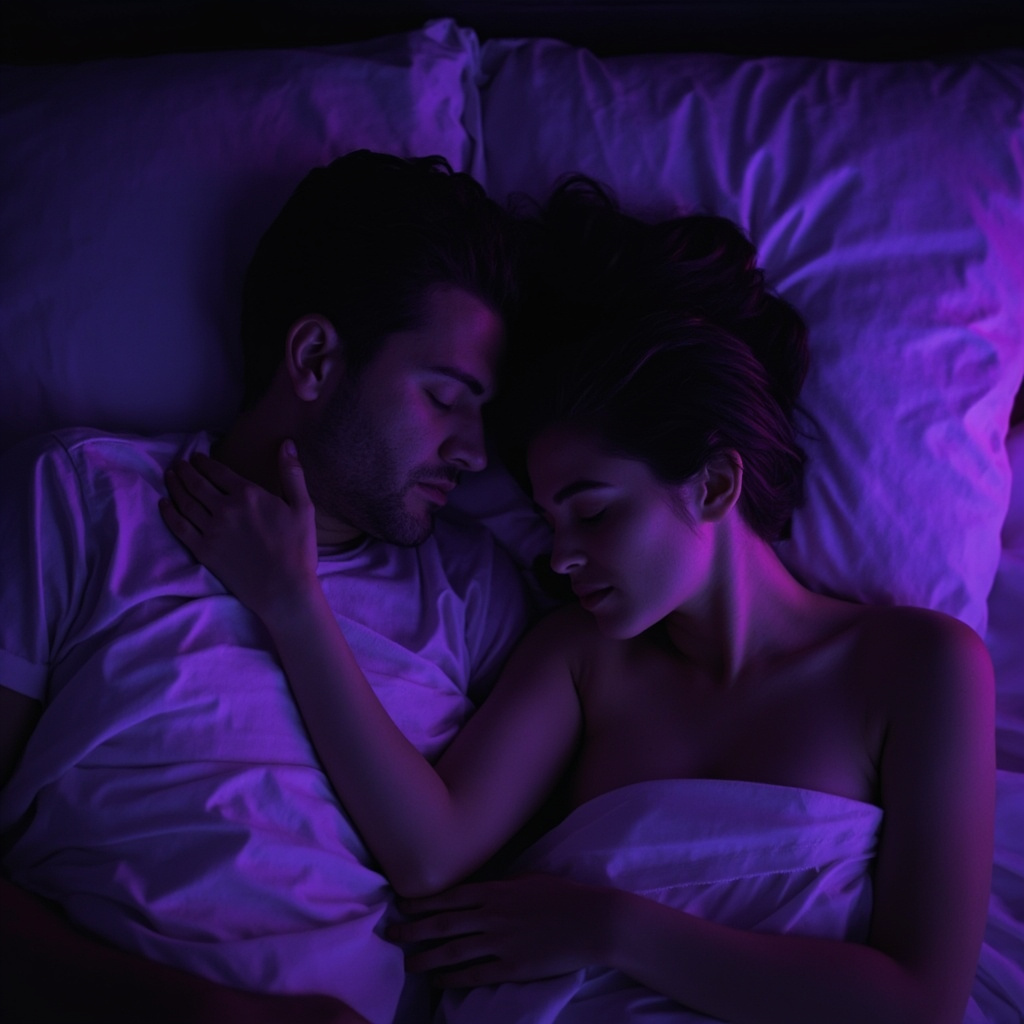
Are You Sleep Compatible?
Find out in 2 minutes — free
Most advice about couples and sleep timing focuses on the mismatched pair — the night owl and the early bird, quietly resenting each other from opposite ends of the evening. But that leaves out a much larger group: couples who share a chronotype. Two early birds. Two night owls. Are they actually better off, and does it matter which type they both are?
The research on this is newer and more specific than the general "go to bed at the same time" advice couples usually hear, and the answer isn't quite what you'd expect.
Concordance Matters More Than Type
The clearest finding across chronobiology research is that shared chronotype — concordance — predicts better sleep outcomes for couples regardless of whether that shared type is early or late. A 2014 study in *Chronobiology International* found that couples with matching chronotypes reported higher relationship satisfaction and fewer sleep-related conflicts than discordant pairs, and the effect size was similar whether both partners were morning types or both were evening types. Being in sync mattered more than what you were in sync about.
That said, "similar" doesn't mean "identical outcomes." When researchers looked closer at the two concordant groups separately, some real differences emerged — just not the ones most people expect.
Why Two Early Birds Often Score Better on Paper
Couples who are both morning types tend to show higher sleep efficiency and more consistent sleep duration in tracked data. Part of this is structural rather than biological: work schedules, school pickups, and most social obligations are built around a morning-oriented world. A couple whose natural rhythm already aligns with a 10pm bedtime and 6am wake time experiences less friction between their biology and their calendar. Less friction means less accumulated sleep debt.
Morning-type couples also report an underrated advantage: overlapping high-energy windows early in the day, when both partners have the cognitive bandwidth for planning, problem-solving, and the kind of logistics conversations that otherwise get relegated to exhausted evenings.
Why Two Night Owls Aren't Actually Behind
Evening-type couples show something researchers didn't originally expect: once schedule constraints are equalized — weekends, remote work, non-parenting stretches of life — their sleep synchrony and subjective sleep quality match morning-type couples closely. Where they lose ground is almost entirely due to social jet lag, the mismatch between a late natural rhythm and an early-starting world, not anything intrinsic to being an evening type as a couple.
Two night owls sharing a bed also get something morning-type couples often miss: a genuinely unhurried wind-down window. With no shared pressure to be asleep by a socially "responsible" hour, evening-type couples report more relaxed, less clock-watching bedtime routines — which several studies link to lower pre-sleep cortisol.
The Real Risk for Evening-Type Couples
The catch is cumulative. Two night owls who consistently fall asleep at 1am and get woken at 7am by an alarm calibrated to a morning-oriented world are both running the same weekly sleep deficit, simultaneously. Unlike a mismatched couple, where the early-bird partner at least protects one person's schedule, a concordant evening-type couple has nobody in the relationship anchoring an earlier wind-down — which means the debt compounds for both partners at the same rate, week after week.
Practical Takeaways for Concordant Couples
If you're both early birds, protect your evenings deliberately. The risk isn't sleep debt — it's that your shared tendency to wind down early can quietly crowd out unhurried time together, since neither of you is naturally pushing for a later, slower evening.
If you're both night owls, treat your shared bedtime as negotiable, not fixed. Because neither partner is biologically pulling the other toward an earlier night, the couple needs to deliberately choose one — otherwise the schedule tends to drift later indefinitely.
Use weekday light exposure as a couple, not solo. Morning light exposure shifts a shared evening chronotype earlier gradually and safely, without forcing either partner into a schedule that fights their biology. Doing it together — a shared coffee near a bright window — reinforces the habit for both of you.
Track your actual overlap, not your assumed one. Many couples believe they know their chronotype pairing, but self-report is notoriously inaccurate compared to what a week of real sleep data shows.
Start Tracking Tonight
Whether you're both early birds, both night owls, or something in between, the useful question isn't which type is "better" — it's how well your actual sleep patterns are lining up night to night. SleepTwo tracks both partners' sleep through Apple Watch and shows a nightly compatibility score, so you can see whether your shared chronotype is working for you or quietly building a shared sleep debt. Download free on the App Store — Together Pro covers both partners. sleeptwo.app
Research & further reading
- Sleep Deprivation and Deficiency— NIH / NHLBI
- Stages of Sleep— Sleep Foundation
- How Much Sleep Do We Really Need?— Sleep Foundation
Stop guessing. Start knowing.
SleepTwo gives couples a real 0–100 compatibility score every morning — based on actual sleep data, not a quiz. Free to download. One subscription covers both of you.
iOS 17+ · iPhone mic or Apple Watch · Free download