
SleepTwo Team
June 19, 2026 · 5 min read
Key insight
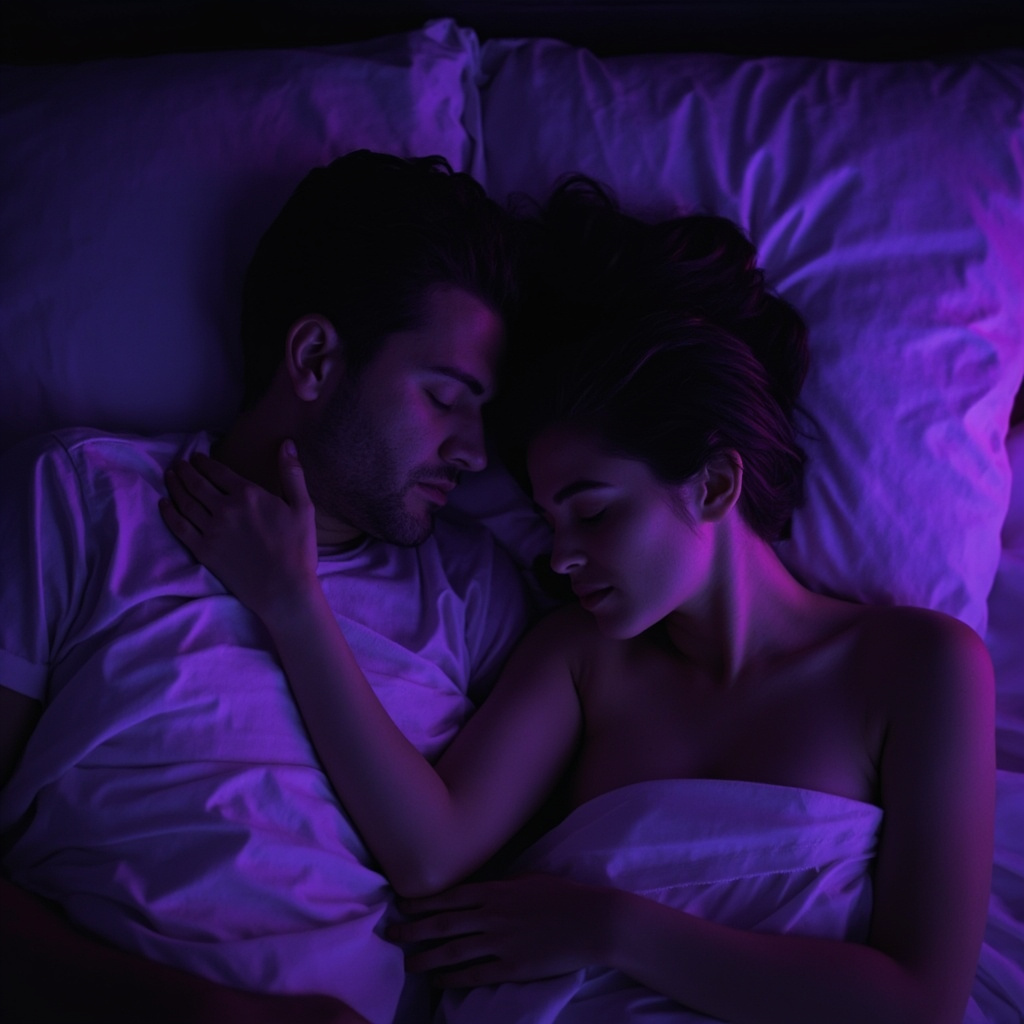
Research shows napping together affects couples' night sleep differently depending on timing and duration. Here's the science on how to nap without disrupting your rest.
Are You Sleep Compatible?
Find out in 2 minutes — free
The Afternoon Question Neither Partner Thinks to Ask
It is 2:30 in the afternoon. Energy dips. The sofa calls. One of you suggests a quick nap. The other is already half-asleep. An hour later you both wake up groggy — and that night, neither of you can fall asleep until midnight.
Most couples who nap together never connect the afternoon nap to the evening insomnia. The relationship is real, well-documented in circadian science, and highly specific: whether a shared nap improves or undermines your night's sleep comes down almost entirely to when it happens and how long it lasts. Get those two variables right, and napping together can become one of the most effective recovery tools in a couple's sleep toolkit. Get them wrong, and you are trading an afternoon of comfort for a night of staring at the ceiling.
Why the Body Wants to Nap in the Afternoon
The urge to sleep after lunch is not caused by eating. It is driven by two independent systems running simultaneously in the body.
The first is adenosine, a molecule produced continuously by the brain's metabolic activity throughout waking hours that creates accumulating sleep pressure. By early afternoon, if you have been awake since seven in the morning, adenosine levels are already meaningfully elevated, producing genuine drowsiness even in people who slept well the night before.
The second is the circadian rhythm itself. The suprachiasmatic nucleus — the brain's internal clock — programs a secondary alertness trough in the early afternoon, typically between 1 and 3 pm. This dip is part of the normal 24-hour cycle, present in all humans regardless of whether they eat lunch or not. Cultures that have historically practised midday rest were working with this biology rather than against it.
For couples, this means the mid-afternoon urge to nap is not laziness. Both partners are experiencing the same circadian trough simultaneously, which is one reason shared afternoon rest feels so natural.
When a Nap Together Actually Helps
A well-timed nap genuinely restores alertness, mood, and cognitive performance without meaningfully affecting night sleep — provided two conditions are met.
Duration under 30 minutes. Sleep science distinguishes between power naps (10 to 20 minutes), which restore alertness by increasing lighter Stage 1 and Stage 2 sleep, and longer naps (over 30 minutes), which allow the brain to enter deep slow-wave sleep. The problem with deep slow-wave naps is that waking from them produces sleep inertia — the profound grogginess that makes you feel worse than before — and they also discharge a meaningful portion of the adenosine that was building toward that night's deep sleep. A 20-minute nap delivers most of the restorative benefit without either penalty.
Before 3 pm. Naps taken in the early afternoon are timed with the natural circadian dip and do not substantially delay melatonin onset in the evening. Naps taken after 3 pm, particularly those that extend into the late afternoon, begin to compete with night sleep pressure. By the time the usual bedtime arrives, there is simply less adenosine accumulated, and sleep onset takes longer for both partners.
When couples nap together within these boundaries — 20 minutes or less, before 3 pm — research on napping consistently shows improved afternoon alertness, better mood, and no measurable reduction in night sleep quality.
When a Shared Nap Hurts Night Sleep
The scenarios where afternoon napping disrupts night sleep follow a predictable pattern.
Long naps (over 45 minutes). A nap that reaches deep slow-wave sleep draws down the sleep pressure that both partners need to fall asleep easily at night. Couples who take 90-minute afternoon naps are effectively completing a partial sleep cycle — leaving them feeling temporarily refreshed but facing a bedtime when neither partner is sufficiently sleepy. What follows is extended sleep onset, more fragmented early sleep, and a mismatch in each person's expected bedtime.
Late timing. A nap at 5 or 6 pm sits squarely in the evening wind-down period and directly delays melatonin secretion. Both partners may feel they cannot fall asleep until midnight, not realising that the late nap has simply shifted their circadian readiness forward by several hours.
Compensatory napping. Couples who are chronically sleep-deprived — from late nights, demanding work schedules, or new parenthood — are most drawn to long afternoon naps. The biology makes sense: the body is trying to recover accumulated sleep debt. But long compensatory naps, while genuinely helpful for acute recovery, cannot fully replace night sleep quality. They trade short-term relief for further destabilised nighttime schedules.
Four Practical Tips for Couples Who Nap
Set a 20-minute shared alarm before you lie down. The most common reason naps run long is that neither partner sets a limit. A shared alarm — set before you lie down together — removes the decision from a moment when both of you are drowsy and therefore not well-placed to make it. Twenty minutes is enough to restore alertness without entering deep sleep.
Treat 3 pm as your shared nap cutoff. If neither partner naps after 3 pm, bedtime sleep onset is rarely affected. This is one of the simplest and most reliable sleep hygiene rules available. Establishing it as a shared norm means neither partner makes the late-nap decision in isolation, which is when it most commonly happens.
Use naps strategically, not habitually. Regular long afternoon napping can become a pattern that destabilises night sleep for both partners. Reserve shared naps for specific recovery situations — after a poor night, before a demanding evening, during a period of high stress — rather than making them a daily default. Couples who nap strategically maintain their nighttime sleep pressure far better than those who nap out of routine.
Compare your nap days to your non-nap days in your sleep data. The clearest way to know whether your napping habit is helping or hurting your specific night sleep is to track both. Many couples discover that their nap day bedtimes drift consistently later, or that their deep sleep is reduced — evidence that the nap is competing with rather than supporting their night rest.
Start Tracking Tonight
SleepTwo tracks both partners' sleep via Apple Watch every night, making it easy to compare your sleep quality on days you nap together against days you do not. Your nightly compatibility score shows how well your rhythms aligned, and a clear pattern of lower scores on nap days — or later sleep onset and reduced deep sleep — tells you exactly what your afternoon habits are costing your night. Armed with that data, finding the nap timing and duration that works for both of you becomes a shared experiment rather than a guess. Download free on the App Store — Together Pro covers both partners. sleeptwo.app
Research & further reading
- Sleep Hygiene— Sleep Foundation
- Healthy Sleep Tips— NIH / NHLBI
- Sleep Health— CDC

Stop guessing. Start knowing.
SleepTwo gives couples a real 0–100 compatibility score every morning — based on actual sleep data, not a quiz. Free to download. One subscription covers both of you.
iOS 17+ · iPhone mic or Apple Watch · Free download