
SleepTwo Team
June 4, 2026 · 5 min read
Key insight
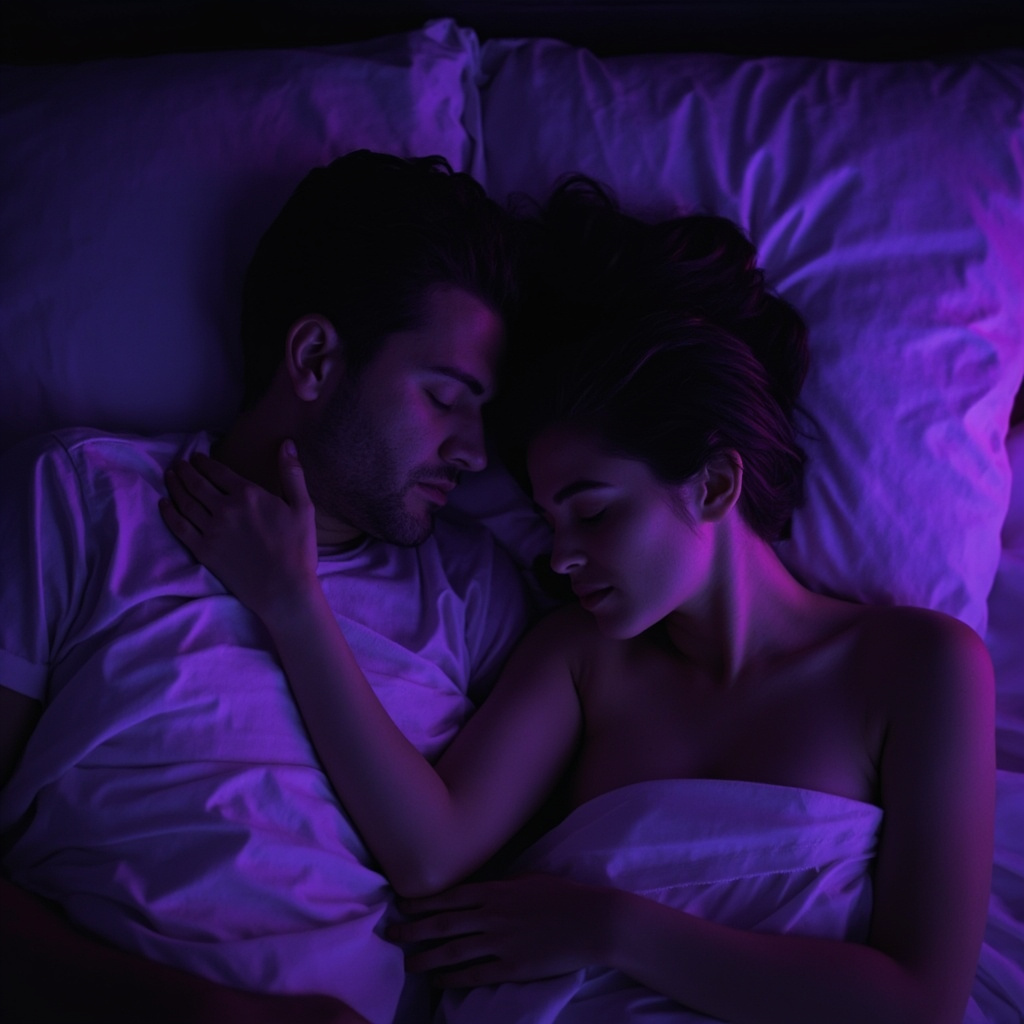
Cuddling before sleep triggers oxytocin, lowers cortisol, and deepens rest for both partners. Here's what science reveals about pre-sleep physical touch.
Are You Sleep Compatible?
Find out in 2 minutes — free
The Fact Nobody Tells Couples at Bedtime
A few minutes of physical contact before sleep can lower your heart rate, reduce cortisol levels, and accelerate your transition into deep sleep. Not metaphorically — measurably. Research in psychoneuroimmunology has documented the physiological chain reaction triggered by skin-to-skin contact in intimate partners, and it turns out that the instinct many couples have to hold each other before drifting off is doing more for their sleep quality than most sleep hygiene advice combined.
The science here is robust enough to take seriously, and specific enough to be useful.
Oxytocin: The Chemistry of Contact
Physical contact between romantic partners — particularly skin-to-skin touch, a hand on the back, or the sustained contact of holding each other — triggers the release of oxytocin from the hypothalamus. Oxytocin is often described as the "bonding hormone," but its effects on sleep are more direct than that label suggests.
Oxytocin receptors are distributed throughout the brain and body, and oxytocin release has a well-documented suppressive effect on the stress axis — specifically the hypothalamic-pituitary-adrenal (HPA) axis responsible for cortisol production. When oxytocin rises, cortisol falls. When cortisol falls, the nervous system shifts toward parasympathetic dominance: heart rate slows, breathing deepens, vigilance decreases, and the physiological conditions for deep sleep become easier to sustain.
Research published in *Psychoneuroendocrinology* found that women who received more physical affection from their partners before sleep showed measurably lower overnight cortisol levels. Lower cortisol during sleep is associated with deeper slow-wave sleep in the first half of the night — precisely the stage most responsible for physical restoration and immune function.
Temperature, Touch, and Deep Sleep Onset
There is a lesser-known physiological dimension to pre-sleep cuddling that involves thermoregulation. Deep sleep requires a drop in core body temperature, and the body achieves this partly through peripheral vasodilation — allowing heat to escape through the skin of the hands, feet, and face. Physical contact between partners facilitates this heat exchange at the skin surface, potentially supporting the temperature drop that enables sleep onset.
This is not uniform in its benefits. Couples who stay closely intertwined all night often report overheating, which disrupts sleep in the second half of the night as core temperature climbs. The research-informed picture is that contact in the pre-sleep window — the 10 to 20 minutes before sleep onset — provides the hormonal and thermal benefits without the disruption that extended close contact can produce.
The pattern many couples naturally arrive at — holding each other to fall asleep before shifting to separate sleeping positions — turns out to be physiologically sound rather than a sign of diminished closeness.
The Nervous System Regulation Effect
Beyond oxytocin and temperature, physical contact between partners activates what neuroscientist Stephen Porges describes as the social engagement system — a branch of the autonomic nervous system that, when active, produces a felt state of safety and connection incompatible with the threat activation that delays sleep onset.
When this system is engaged, the ventral vagal nerve circuit dampens sympathetic arousal, slows the heart, deepens breathing, and creates the physiological conditions in which sleep is not just possible but easily achieved. It is one of the reasons why people commonly report falling asleep faster next to a trusted partner than alone, even in an objectively identical environment.
For couples who carry work stress or unresolved anxiety into the evening, physical contact before sleep is not just emotionally comforting — it is a physiological interrupt that the nervous system uses to downregulate from an activated state.
Four Practical Approaches for Tonight
Make the first 10 minutes intentional. The pre-sleep window is neurologically distinct from the rest of the day — arousal is lower, defences are down, and the brain is more receptive to the calming effects of contact. Ten minutes of deliberate physical closeness before attempting to sleep is sufficient to trigger the oxytocin-cortisol cascade that supports sleep onset for both partners.
Skin contact matters more than position. Research on tactile stimulation suggests that direct skin-to-skin contact is more effective at triggering oxytocin release than contact through clothing. A hand on a bare back, intertwined legs, or simply lying close with arm-to-torso contact is physiologically more meaningful than an embrace through layers of fabric.
Separate positions for the sleep itself are fine. Couples who feel guilty about shifting to separate sleeping positions during the night can let that go. The sleep benefits of pre-sleep cuddling come from the pre-sleep contact, not from maintaining contact all night. Moving to a comfortable sleeping position that supports deeper rest for both people is the appropriate outcome.
Pair physical contact with a verbal close. Research on social bonding before sleep consistently shows that combining physical contact with verbal acknowledgment — a brief, warm exchange rather than a silent embrace — produces the strongest cortisol suppression and the fastest sleep onset. It does not need to be a significant conversation; a few genuine words are sufficient.
Start Tracking Tonight
SleepTwo tracks both partners' sleep architecture every night via Apple Watch, so you can see the real difference that your pre-sleep routine makes in your deep sleep, REM sleep, and nightly compatibility score. If you are curious whether adding deliberate physical contact before sleep shifts your numbers — and it typically does — the data will show it within a week. Download free on the App Store — Together Pro covers both partners. sleeptwo.app
Research & further reading
- Sleep and Relationship Functioning— PubMed Central
- Sleep and Emotions— American Psychological Association
Stop guessing. Start knowing.
SleepTwo gives couples a real 0–100 compatibility score every morning — based on actual sleep data, not a quiz. Free to download. One subscription covers both of you.
iOS 17+ · iPhone mic or Apple Watch · Free download