
SleepTwo Team
July 8, 2026 · 5 min read
Key insight
One of you can run on six hours. The other needs nine. Here's why that gap causes real friction, and how couples close it without anyone losing sleep.
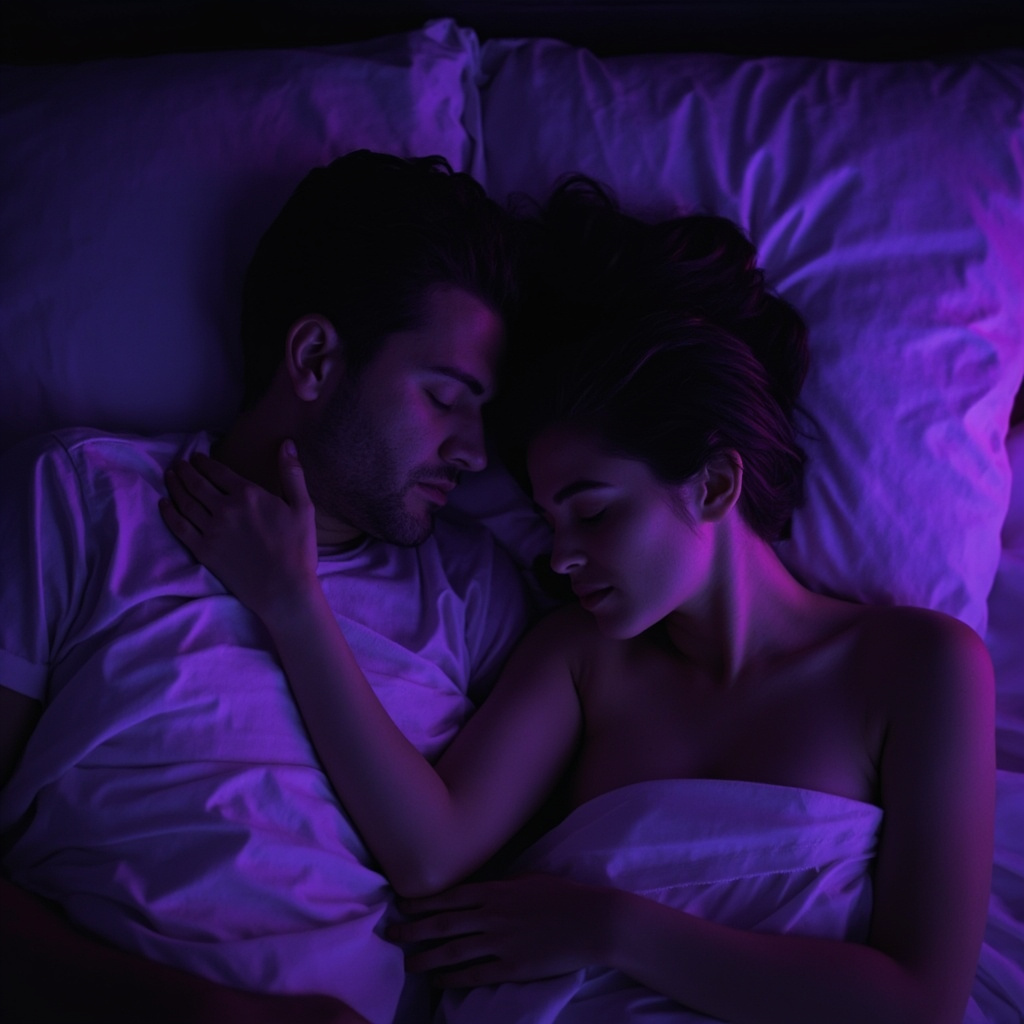
Are You Sleep Compatible?
Find out in 2 minutes — free
The Fight That Isn't Really About Sleep
One of you is up and moving by 6am, wide awake and mildly irritated that the other is "still asleep." The other genuinely cannot function on less than nine hours and feels quietly resentful at being made to feel lazy for a biological baseline they didn't choose. Neither of you is wrong. You're just running on different sleep requirements, and nobody warned you that this alone could become a recurring source of tension.
Sleep researchers have long known that individual sleep need is not a lifestyle choice — it's a fairly fixed trait, similar to height, that varies genuinely from person to person even after controlling for age, activity level, and health. Some adults are fully restored on six and a half hours. Others need nine to feel the same way, and no amount of "toughening up" or "just going to bed earlier" changes that underlying number. When two people with different sleep needs share a bed and a schedule, the gap between them doesn't average out. It just becomes a daily negotiation.
Why the Gap Causes More Friction Than Either Partner Expects
The problem rarely shows up as an argument about sleep directly. It shows up sideways — as irritability about who "always" wakes up first, guilt over needing more rest than a partner, or quiet frustration at being kept awake by someone who is done for the night before you are. Because sleep need feels like it should be something you can control, couples often misread a biological mismatch as a character flaw: one partner seems lazy, the other seems overly wound-up or unable to relax.
There's also a compounding effect. The partner who needs less sleep tends to underestimate how much their partner is struggling, because they've never personally experienced what six hours actually feels like for someone whose baseline is nine. Meanwhile, the partner who needs more sleep often apologizes for it, chasing a "normal" that was never actually going to fit their physiology, and picking up subtle stress that itself makes sleep harder to get.
What Actually Helps
Name the gap as biological, not behavioral. The single most useful shift for most couples is simply agreeing that sleep need is a trait, not a habit. Once "I need more sleep than you" stops sounding like an excuse and starts sounding like an eye color, most of the resentment underneath it has nowhere left to attach.
Stop syncing bedtimes and start syncing wind-down. Couples often assume going to bed at the exact same time is the goal. It usually isn't the right target if your sleep needs genuinely differ — forcing the higher-need partner into a shorter night just to match doesn't close the gap, it just moves the sleep debt onto them permanently. What tends to work better is a shared wind-down window — dimming lights, phones away, quiet conversation — even if one partner then stays up reading for another hour while the other actually falls asleep.
Protect the lower-sleep-need partner's early mornings. If one of you is up two hours before the other most days, structure the bedroom for a quiet exit — clothes laid out the night before, a robe by the door, blackout curtains that don't get disturbed by someone slipping out. This one change removes a huge share of the daily friction, because the higher-need partner isn't jolted awake by someone else's morning.
Track your actual numbers instead of arguing about impressions. Most sleep-need conflicts are fought with vague evidence — "you always sleep in," "you never let me actually rest." Looking at real overnight data for a week usually resolves the disagreement faster than any conversation can, because it turns a subjective complaint into a shared, undeniable fact both partners can plan around.
Start Tracking Tonight
SleepTwo tracks both partners' sleep every night via Apple Watch, so instead of guessing whose sleep need is "reasonable," you can actually see the gap — how much sleep each of you is getting, how it lines up with how rested you each report feeling, and how the mismatch shows up in your nightly compatibility score. Couples who can see the numbers side by side tend to stop treating the gap as a character issue and start treating it as a schedule to design around. Download free on the App Store — Together Pro covers both partners. sleeptwo.app
Research & further reading
- Insomnia— Sleep Foundation
- Sleep Disorders— NIH / NHLBI
Stop guessing. Start knowing.
SleepTwo gives couples a real 0–100 compatibility score every morning — based on actual sleep data, not a quiz. Free to download. One subscription covers both of you.
iOS 17+ · iPhone mic or Apple Watch · Free download